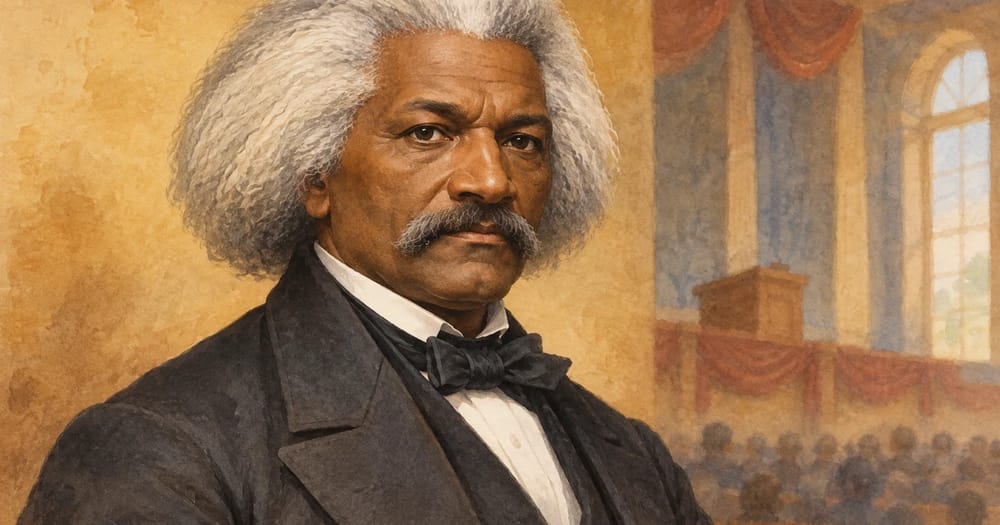
What can a voice do? It can tell a story, ask a question or persuade somebody to listen. Frederick Douglass used his voice—and his writing—to challenge people who believed that some human beings could be owned by others.
Where did Frederick Douglass grow up?
Frederick was born in Maryland, in the United States, around 1818. He did not know his exact birthday. He was born into slavery: a system in which people were treated as property and denied control over their own lives. Our companion article explores why many people say “enslaved person”.
As a young child, Frederick spent time with his grandmother, Betsey Bailey. Enslavement separated families, and he saw very little of his mother, Harriet. Later, he was sent to Baltimore.
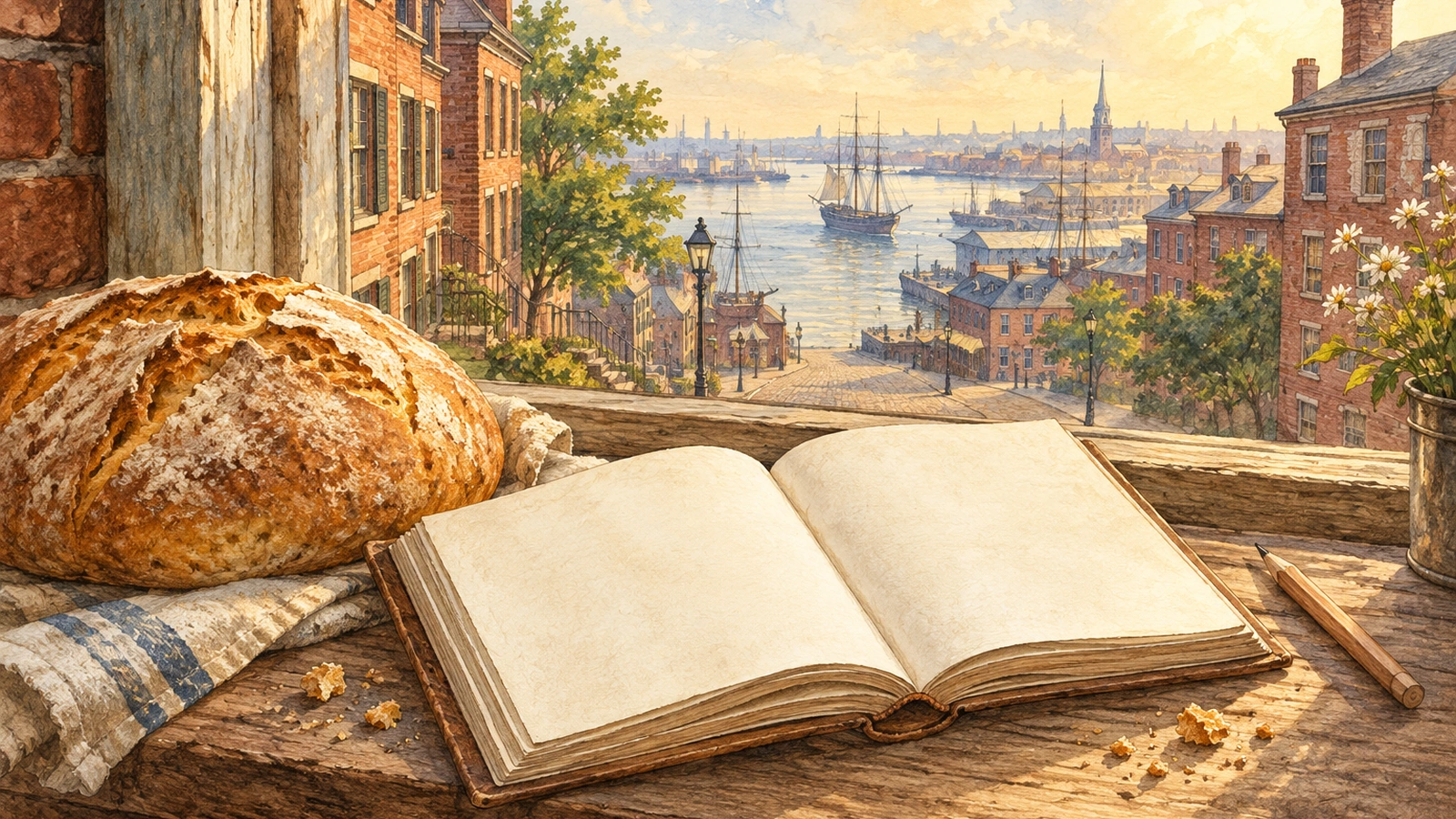
There he began learning the alphabet from Sophia Auld, but her husband Hugh objected and the lessons stopped. Frederick found other ways to learn, including sharing bread with boys he met in the streets in return for their help, and practising letters himself. Find out more about how Frederick Douglass learned to read, the story at the heart of our Bread for Words lesson. Learning gave him ways to explore ideas, but it did not by itself end his enslavement.
A person is more than what happens to them. Frederick was a child with family, curiosity and a wish to learn, even while others tried to control his life.

How did Anna Murray help Frederick escape?
In Baltimore, Frederick met Anna Murray. Anna was a free Black woman who helped him prepare to escape. The National Park Service describes how she helped with a sailor’s disguise and papers for his journey.
In 1838 Frederick travelled north to New York. Anna joined him, and they married. They settled in Massachusetts and chose the surname Douglass. They went on to have five children. Frederick’s escape was a courageous act, but it was not a story of someone succeeding entirely alone: Anna’s help mattered.
Anna continued to work and care for their family while Frederick travelled to speak. Her work was important, even though it did not always receive the attention given to his public speeches.
Even after the journey, danger remained. Laws and people seeking to capture freedom seekers meant that reaching a northern state did not automatically make someone safe.
Why did Frederick Douglass speak against slavery?
An abolitionist is someone who works to end a system or practice. In Douglass’s time, abolitionists worked to end slavery.
Frederick spoke publicly about his life. He described enslavement and challenged the idea that it could ever be fair. He also wrote an autobiography: a book in which a person tells their own life story.
His words reached people in the United States and across the Atlantic. Sharing his experiences helped others understand slavery, but it also exposed him to danger. While he was abroad, supporters arranged to purchase his legal freedom.
What was The North Star?
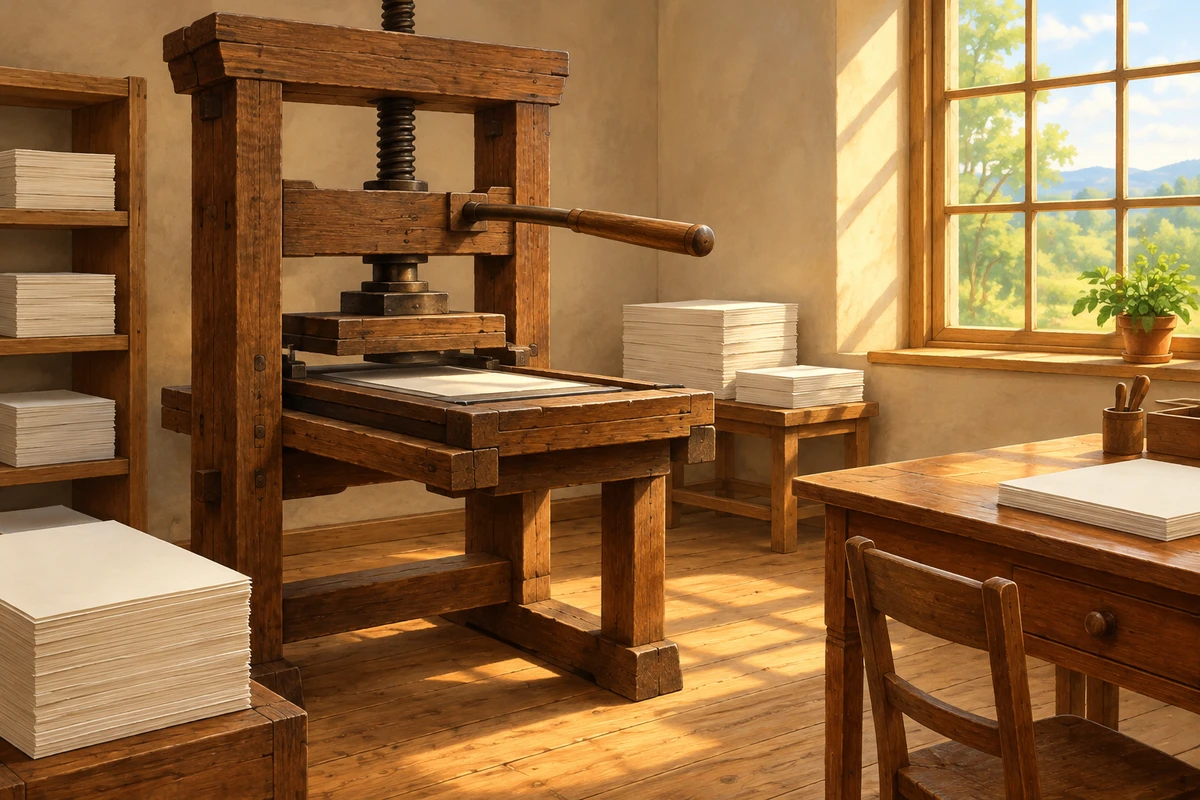
Douglass helped create an anti-slavery newspaper called The North Star. A newspaper could carry arguments, news and calls for change beyond a single meeting room. Many people contributed to the work of writing, printing, sharing and reading it.
Douglass also helped people escaping enslavement through a network known as the Underground Railroad. Despite its name, it was not a railway: it was a network of people who offered assistance along routes to safety.
Did Frederick Douglass campaign for other rights?
The newspaper also supported equal rights for women. Douglass took part in a women’s rights convention at Seneca Falls in 1848 and argued that women should have the right to vote. The fight against injustice had more than one path, and it involved many people working together. Campaigners did not always agree, even when they shared a hope for a fairer society.
During the American Civil War, Douglass urged the United States to make ending slavery a goal. He recruited Black soldiers and spoke up when they were treated and paid unfairly. After the war, in 1865, the Thirteenth Amendment to the US Constitution prohibited slavery and involuntary servitude, except as punishment for a crime after conviction.
That change did not end racism. Douglass continued to speak for equal rights and held public offices later in life. He died in 1895, after decades of work for change.
Three things to notice
- Douglass wrote about his own life, so historians can read his account as well as accounts written by others.
- Anna Murray played an important part in his escape and in their family’s life.
- He was not only a speaker: he was also an author and newspaper publisher.
Down the rabbit hole: Whose stories do we hear?
We have many of Frederick Douglass’s speeches and writings. Fewer records tell Anna Murray Douglass’s story in her own words. Historians look carefully at the records that survive—and ask whose voices are missing.
What might we learn about a family or community if we listened to more than one person’s story?
Try it yourself
Make a small timeline with three spaces. Add one moment from Frederick’s childhood, one from his journey with Anna’s help and one from his work as an adult. Beside each, write the name of a person who helped or worked with him, where the sources tell you one. Leave a space blank rather than inventing an answer.
A note for grown-ups: slavery and racism are difficult subjects. Pause for questions, and preview the historical sources before sharing them; some contain distressing descriptions and language.
The big takeaway
Frederick Douglass’s life was shaped by slavery, but it cannot be reduced to slavery. He was a learner, family member, writer and campaigner. His story also belongs among the stories of many other people who helped one another and worked for change.
Sources and further reading
- Frederick Douglass — National Park Service
- Anna Murray Douglass — National Park Service
- Frederick Douglass and women’s rights — National Park Service
- The 13th Amendment — US National Archives
- Douglass’s own account of learning — chapter VII — for grown-ups; contains distressing historical language.
Curious how Frederick found ways to learn? Explore our companion article, How Did Frederick Douglass Learn to Read?