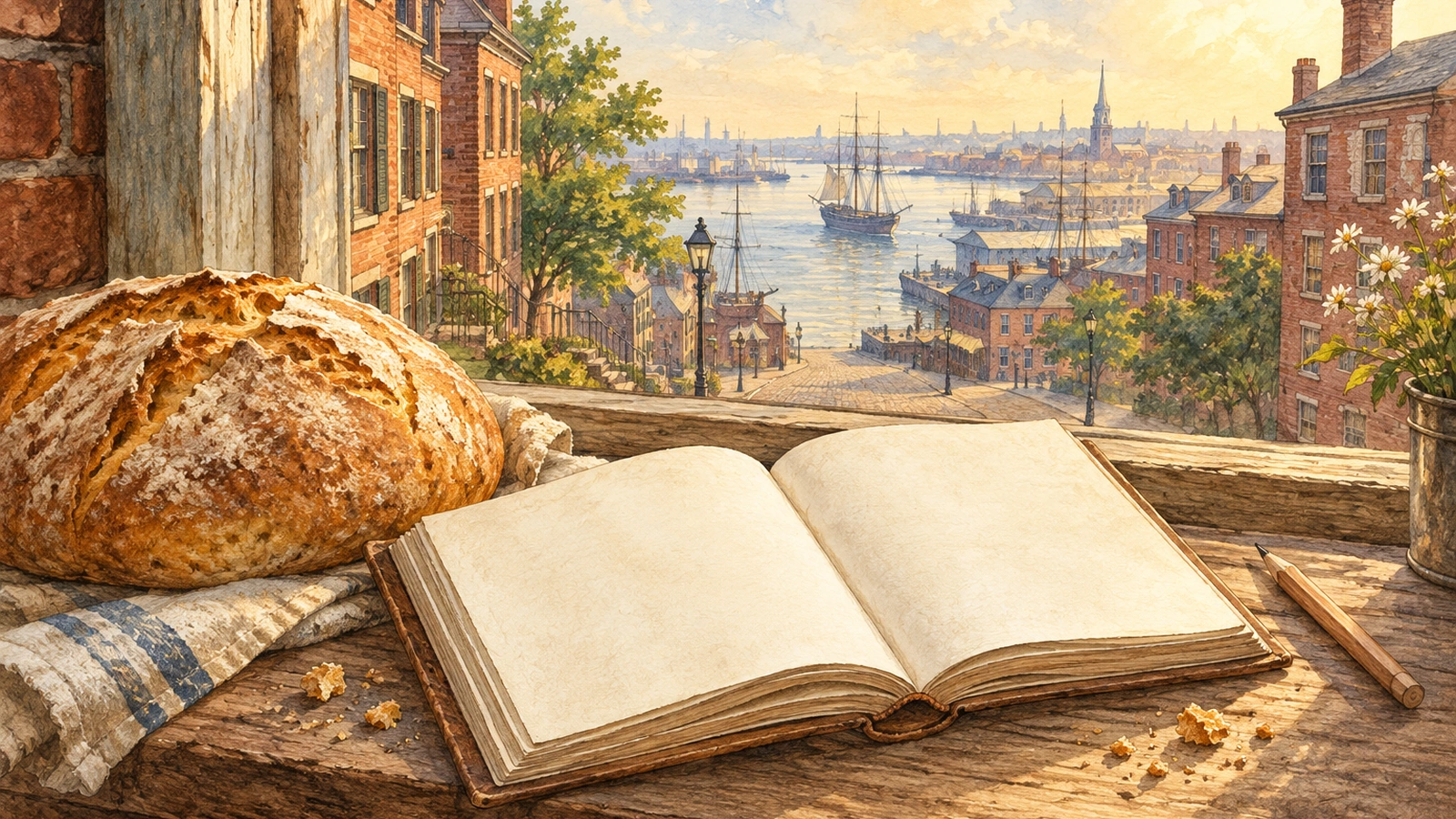
There's something lovely about being snuggled up with the story, isn't there? Perhaps you're tucked under a blanket, listening to someone you love, then something happens in the story. And suddenly you're wide awake. Will they escape? What's behind that door? No, no, mum, please don't stop there. Just one more page.
Does that sound familiar? That's why we call some books page turners. We can't wait to find out what happens next. We can be perfectly safe on the sofa while the characters face danger. We worry about them, we laugh at their muddles, and we keep turning the pages. Welcome to our Wonder podcast.
Today we're discovering how that love of stories became part of the movies with a woman called Alice Guy-Blaché. Alice was born in France in eighteen seventy three. Her father was a bookseller. This is how she discovered a love of reading and literature. Little Alice grew into a young woman who not only enjoyed reading, but loved going to the theatre and had an imagination she would eventually put to extraordinary use.
So she got a job in a photography business and this brought her close to a brand new invention. It wasn't just any camera or any photograph, this was a moving photograph. But how could a picture move? A film is a sequence of still pictures, but show slightly different pictures quickly enough and we perceive movement. Think of a flip book. If you draw a ball in a slightly different position on each page and then flick through it quickly, it seems to bounce.
What does Alice Guy-Blaché have to do with the movies? Well, did she invent movies? No. But she's very important to the first movie. In fact, we could maybe say that there wasn't one person who invented everything needed for movies. People in different places were solving different parts of the puzzle.
And that's often the way with science and technology, is that people learn from one another and bounce off each other. So today first we're gonna talk about a horse. How did a horse help to invent the first movies? Well, there was a question, a wondering that someone had. When a horse gallops, do all four hooves ever leave the ground together?
What do you think? Is there always one on the ground steadying the horse? Well it happens too quickly for us to see clearly. So photographer Eadweard Muybridge used cameras to investigate. In eighteen seventy eight he captured a sequence using twelve cameras triggered one after another as the horse passed. And there it was, all four hooves off the ground and tucked beneath the horse's body. His photographs revealed a moment that our eyes could miss. His work also helped demonstrate how a sequence of still images could recreate movement, an important step towards the movies. Although that was never his plan, it was more about science for him. And then there were others, Louis Le Prince.
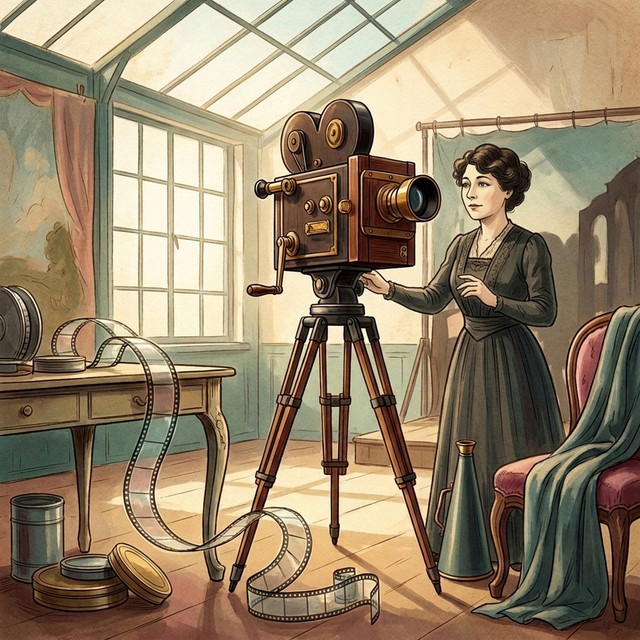
He filmed a garden scene in Leeds in eighteen eighty eight, and then in Edison's laboratory William Dickson helped to develop equipment that helped to record these pictures. Then the Lumière brothers famously projected films for a paying audience in Paris in December eighteen ninety-five. So all this was going on in the background while Alice was working as a secretary for a gentleman called Léon Gaumont. So in this photography business, she was invited to go along with her employer to a demonstration. Now she was twenty-one years old, and on the screen she watched a moving picture: workers walking out of a factory. Well, that is ordinary enough today.
But these people they weren't there. They'd been filmed somewhere else at another moment, and now the audience could watch that moment again. This was phenomenal. No one had ever seen anything like this. So Alice saw that moving pictures could entertain people; the people weren't there, but they could be on the screen. She decided that this could be a really great selling point. She spoke to her boss and said Can we make some recordings to show people how these cameras work? It will help sell them and we'll use made-up stories just like books and plays and people can watch them. And that's what she did. Her films would include funny stories and adventures in which characters face danger.
Stories that could make audiences laugh, worry, and wonder what would happen next. Think of that Page Turner feeling. Now it could happen on a screen. And she ended up becoming one of the earliest filmmakers to develop this new way of telling stories. In fact, she's recognized as the first woman film director.
So let's go back to when she asked her boss, Gaumont, whether or not it was okay for her to make some scenes with friends acting in them. Well, he agreed, but the account says only if she kept up with her office work. So alongside the paperwork there was a new possibility making a film. And Alice learned by doing. And eventually she led film production at Gaumont.
Now there's one of Alice's films I really want you to watch. It's called La Glu, or The Glue. Now it's more than a hundred years old, it's black and white, and there is no spoken dialogue. So you might be thinking, well that sounds boring. But give a mischievous little boy a pot of glue and some terrible ideas. And a hundred years ago or not, suddenly you might want to know what happens next, but I'm not going to tell you where he puts it and I am certainly not going to tell you how it ends. And when you watch it, see whether a film made more than a hundred years ago can still make you laugh. And that's the wonderful thing about a good story. The pictures might look old, but that feeling no, what's gonna happen now? It's still familiar. Alice helped bring that feeling from the pages of stories onto the screen.
And although we call films like this silent, the screenings could be quite noisy. There might be live music, audiences calling out or laughing. The film itself couldn't play back the actors' voices. But there was definitely noise going on in the background. Now Alice kept experimenting. Some films she worked on had colour that she added by hand.
Imagine colouring tiny pictures on a strip of film frame after frame. She also directed films using an early system that matched pictures with separately recorded sound years before talking films became usual at the cinema, and in nineteen ten, after moving to America, Alice co-founded a company called Solax. She cared about believable acting, and at her studio she displayed a simple instruction on the wall: be natural.
Across her career she helped create more than a thousand films as a writer, director, producer or supervisor, an astonishing amount of work from a young woman who loved stories. But her own story has a sad twist. Many of her films were lost, and some of them were credited to the men that she worked with. Histories of cinema often left her out.
Imagine if you made something and you were so proud of it but you discovered that someone else was taking all the credit. Alice spent years trying to find her films and record her achievements, but later research has helped bring her work back into view and that is why we're saying her name today: Alice Guy-Blaché. So did she invent the movies? No. But many people helped make them possible. We can't really say it was down to one particular person. But we know that Alice was the first female movie director. She helped discover what stories these amazing new machines could tell. So here's your wonder challenge. Imagine a tiny story with a beginning, something that changes, and an ending.
Perhaps a lost teddy finds its owner. Perhaps an ordinary sock hides something surprising inside. Can you draw it, act it, make a flip book, or maybe film it with a grown-up? Can you tell it without saying a word? Can you let your face and the actions do all of the talking? As you invent your story, remember that feeling of being snuggled up with a book, desperate for one more page. Can you create that feeling?
Now until next time, keep noticing, keep asking, and keep wondering.